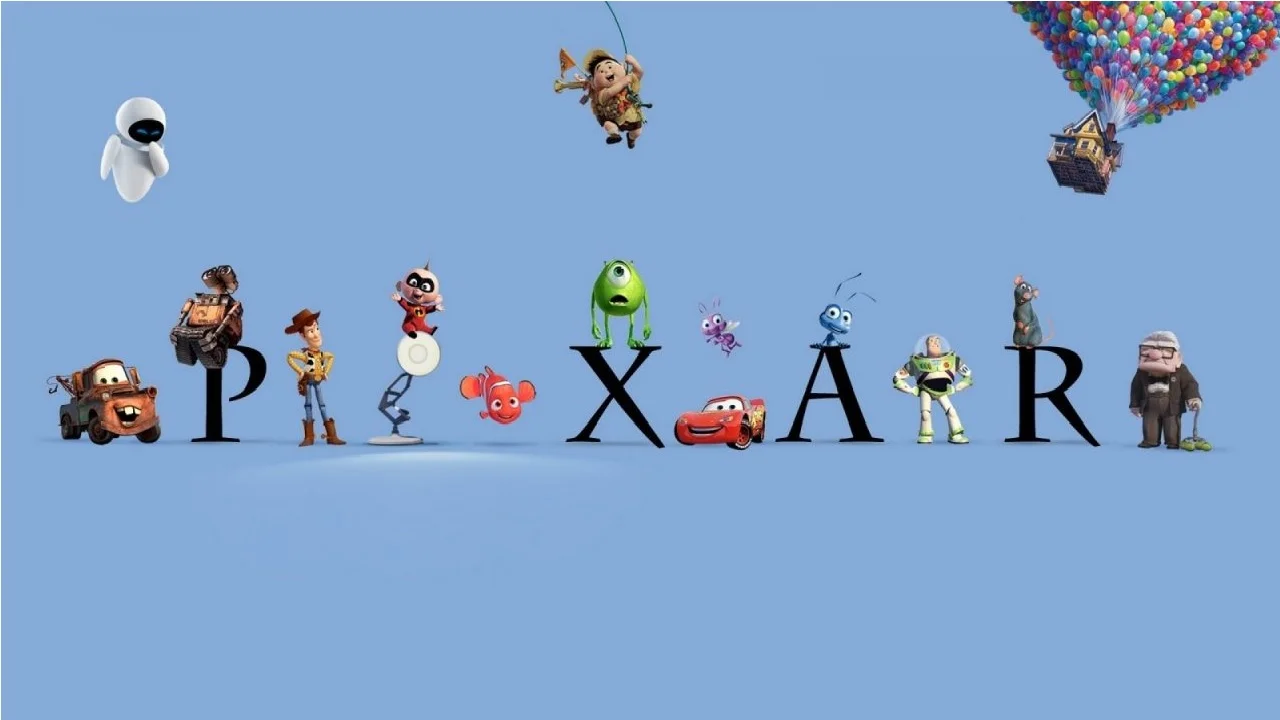
The Pixar Theory is a fan hypothesis arguing that every Pixar Animation Studios film takes place within the same universe along a single continuous timeline. Blogger Jon Negroni published the fully formed theory on his personal website on July 11, 2013, connecting all fourteen Pixar films from Toy Story through Monsters University into one grand narrative spanning millennia[1]. The theory went viral almost immediately, sparking debate across Reddit, pop culture blogs, and mainstream news outlets, and Negroni later expanded it into a book and a regularly updated timeline that incorporated each new Pixar release[2].
Origin
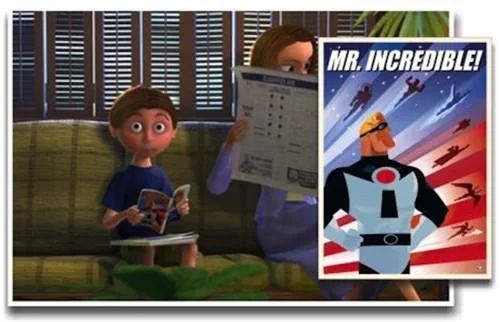
Fan speculation about a shared Pixar universe predates Negroni's theory by several years. As early as September 2009, users on the Pixar Planet message board discussed whether the studio's films existed in the same world, noting cross-film Easter eggs like a child reading The Incredibles comic in Finding Nemo and a postcard featuring Carl and Ellie's address from Up appearing in the Toy Story 3 trailer[5].
The idea picked up steam on the IGN forums in June 2010, where users debated whether the Cars franchise, set in a world of anthropomorphic vehicles, made such a theory impossible[5]. That August, LiveJournal user lynxgriffin posted a detailed speculation tying together all Pixar films and shorts, introducing the concept of a "portaltech" force and proposing that the Cars civilization arose after humans abandoned Earth[12]. Her theory addressed everything from The Incredibles to Luxo Jr. in a single speculative timeline.
On September 4, 2012, Cracked.com's web series "After Hours" aired an episode where one host argued that every Pixar movie predicted a robot apocalypse. The theory was entertaining but incomplete, failing to incorporate Ratatouille, A Bug's Life, and Brave[1].
Jon Negroni, a 22-year-old living in Virginia, saw the Cracked video and left a comment outlining how the remaining films could fit. That comment became one of the most upvoted on the video[2]. Over the following year, Negroni rewatched every Pixar film repeatedly, fleshing out the idea with friends. "Some of the biggest revelations in the article are recent discoveries that prompted me to finalizing the theory in the first place," he told the Daily Dot[2].
On July 11, 2013, Negroni published his complete thesis on his WordPress blog[1]. The theory constructed a timeline beginning with Brave in the Dark Ages and ending with Monsters University in the distant future, weaving in the rise of BNL, the evolution of animal intelligence, and the war between humans, animals, and machines.
- Platform: Jon Negroni's WordPress blog (original theory), Reddit / pop culture blogs (viral spread)
- Creator: Jon Negroni (theorist), lynxgriffin (early LiveJournal contributor), Super Carlin Brothers (YouTube popularizers)
- Date: 2013
Overview
The Pixar Theory proposes that all Pixar movies, from Brave set in medieval Scotland to Wall-E's post-apocalyptic future, take place in one shared universe where animals, machines, and humans exist in an escalating power struggle across time. The theory traces recurring elements like the megacorporation Buy-N-Large (BNL), increasingly intelligent animals, and sentient artificial intelligence to argue that Pixar's Easter eggs and cross-film references aren't just fun callbacks but evidence of a deliberate (or at least coherent) shared narrative[1].
At its most ambitious, the theory claims that Boo from Monsters, Inc. grows up to become the witch in Brave, traveling through time via magical doors to search for her monster friend Sully[7]. A carved wooden figure of Sully visible in the witch's workshop and the recurring Pizza Planet truck serve as key pieces of evidence[14].
How It Spread
The theory went viral within hours. On the same day it was published, Negroni's post was submitted to r/FanTheories and r/Movies on Reddit, where it collected over 1,100 and 2,000 upvotes respectively[5]. It was also picked up by forum communities on NeoGAF and MMA Junkie[14].
By July 12, a wave of pop culture outlets covered the theory. Vulture called it "an elaborate journey through the films of Pixar"[4]. Kotaku's Patricia Hernandez described it as "bonkers" but admitted "the way Negroni explains it, it makes sense"[7]. Mashable reprinted the full theory with Negroni's permission, and the Daily Dot ran an interview where Negroni discussed the hardest part of his work: fitting in Monsters, Inc. "I couldn't rationalize where these monsters really fit in, since the idea of 'other dimensions' wasn't something we'd seen in other Pixar movies," he said. "I only recently figured out that they are mutated animals travelling back in time"[2]. Coverage also appeared on BoingBoing, the A.V. Club, and Buzzfeed[10].
On July 15, Negroni posted a simplified visual timeline on his blog to make the theory more accessible[13]. Three days later, Jalopnik tracked down Jay Ward, Pixar's art coordinator and franchise guardian for Cars, to ask if the theory held any truth[8]. Ward laughed it off: "It's almost like the 9/11 conspiracy theories... it's like, really? No, the movies were sort of made in a different order by different directors in different times, in different places. It's cool that it all worked out that way, but it probably was not intentional"[8].
On July 24, 2013, the YouTube duo Super Carlin Brothers released a video explaining the theory, which significantly boosted its reach and became one of the most-watched Pixar Theory breakdowns online[11].
How to Use
The Pixar Theory is typically referenced rather than formatted like a traditional image macro. People commonly use it by:
- Pointing out a new Easter egg or cross-film reference in a Pixar movie and connecting it to the theory's timeline
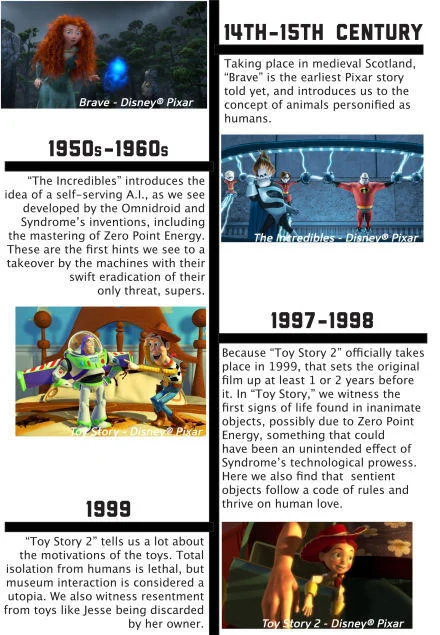
- Creating timeline infographics or flowcharts showing how each film fits into the shared universe
- Posting "mind blown" reactions when a new Pixar film accidentally reinforces the theory
- Using it as a template for similar "unified theory" arguments about other franchises (Disney, DreamWorks, etc.)
Cultural Impact
The Pixar Theory became one of the defining examples of internet fan theorizing in the 2010s. It helped popularize the format of long-form fan theories as a genre of online content, paving the way for similar deep-dive analyses of the Marvel Cinematic Universe, Game of Thrones, and other franchises.
Disney's decision to create their own official "Pixar connections" video in 2015 showed the theory had reached the studio itself[5]. While Pixar never confirmed the theory, they also never shut it down, and the studio's own culture of embedding Easter eggs in their films kept giving fans new material.
Negroni's theory also demonstrated the power of blog-to-viral content pipelines in the early 2010s. A single blog post by a 22-year-old generated coverage across dozens of major outlets within 48 hours, years before TikTok and Twitter threads became the default viral formats[2].
Fun Facts
- Jay Ward, Pixar's Cars franchise guardian, compared the theory to 9/11 conspiracy theories when asked about it, but followed up by joking it was "all Steve Jobs' master plan" to sell the iPhone 6[8].
- The hardest film for Negroni to fit into the theory was Monsters, Inc., because it required explaining another dimension. His breakthrough was reinterpreting the monsters as mutated animals using time-traveling doors rather than interdimensional portals[2].
- Negroni spent a full year rewatching every Pixar film before publishing his theory, starting from a single comment he left on a Cracked video[2].
- The Good Dinosaur (2015) pushed the theory's timeline back by millions of years, as it was set in a world where the extinction asteroid missed Earth[6].
- A wooden carving of Sully and the Pizza Planet truck appear in the witch's workshop in Brave, serving as two of the theory's most cited pieces of visual evidence[7].
Frequently Asked Questions
What is the Pixar Theory?
The Pixar Theory is a fan hypothesis arguing that every Pixar movie takes place in the same universe along a single timeline, connected by recurring characters, corporations, and Easter eggs[1].
Where did the Pixar Theory come from?
Jon Negroni published the complete theory on his blog on July 11, 2013, building on earlier fan discussions on the Pixar Planet forums and a 2012 Cracked.com video[5].
What does the Pixar Theory mean?
It proposes that Pixar's films tell the story of a power struggle between humans, animals, and machines across centuries, with the megacorporation Buy-N-Large driving humanity's eventual exile from Earth[3].
How do you use the Pixar Theory?
Fans typically reference it when spotting cross-film Easter eggs in new Pixar movies, create timeline graphics, or use it as a framework to analyze new releases[13].
Is the Pixar Theory still popular?
The theory is widely recognized and gets renewed attention with each Pixar release. The Super Carlin Brothers posted an updated version in 2022, and Mental Floss covered it in connection with Inside Out 2 in 2024[6].
Who created the Pixar Theory?
Jon Negroni, a 22-year-old from Virginia, formalized the theory in 2013 after spending a year developing it from a comment he left on a Cracked.com video[2].
Is the Pixar Theory confirmed by Pixar?
No. Jay Ward, Pixar's art coordinator for Cars, told Jalopnik in 2013 that the connections were "probably not intentional" since "the movies were sort of made in a different order by different directors"[8].
What is the timeline order of the Pixar Theory?
The timeline begins with The Good Dinosaur in prehistory, moves through Brave in the Dark Ages, up through Toy Story, Wall-E, Cars, A Bug's Life, and Monsters, Inc. in the far future, then loops back to Brave via time travel[6].
How does Boo connect to Brave in the Pixar Theory?
The theory argues that Boo from Monsters, Inc. grows old searching for Sully, learns to use time-traveling doors, and becomes the witch in Brave, explaining the Sully carving in the witch's workshop[7].
Were there Pixar shared universe theories before Negroni?
Yes. Fans on the Pixar Planet forums speculated about connections as early as 2009, and LiveJournal user lynxgriffin posted a detailed shared universe theory in August 2010[12].
Did the Pixar Theory become a book?
Yes. Negroni expanded his blog theory into a full-length book with additional connections and analysis[11].
What role does Buy-N-Large play in the Pixar Theory?
BNL is the thread connecting multiple films. It appears in Toy Story 3, Finding Nemo, and Up before taking over the world entirely in Wall-E, making it the theory's overarching corporate villain[3].