I Want This On A Shirt Bot Bait is a Twitter tactic where users trick print-on-demand shirt scraper bots into auto-listing warning graphics or absurd text designs. It started in December 2019 as an anti-piracy prank and returned in June 2023 in a darker, jokier form.
Origin
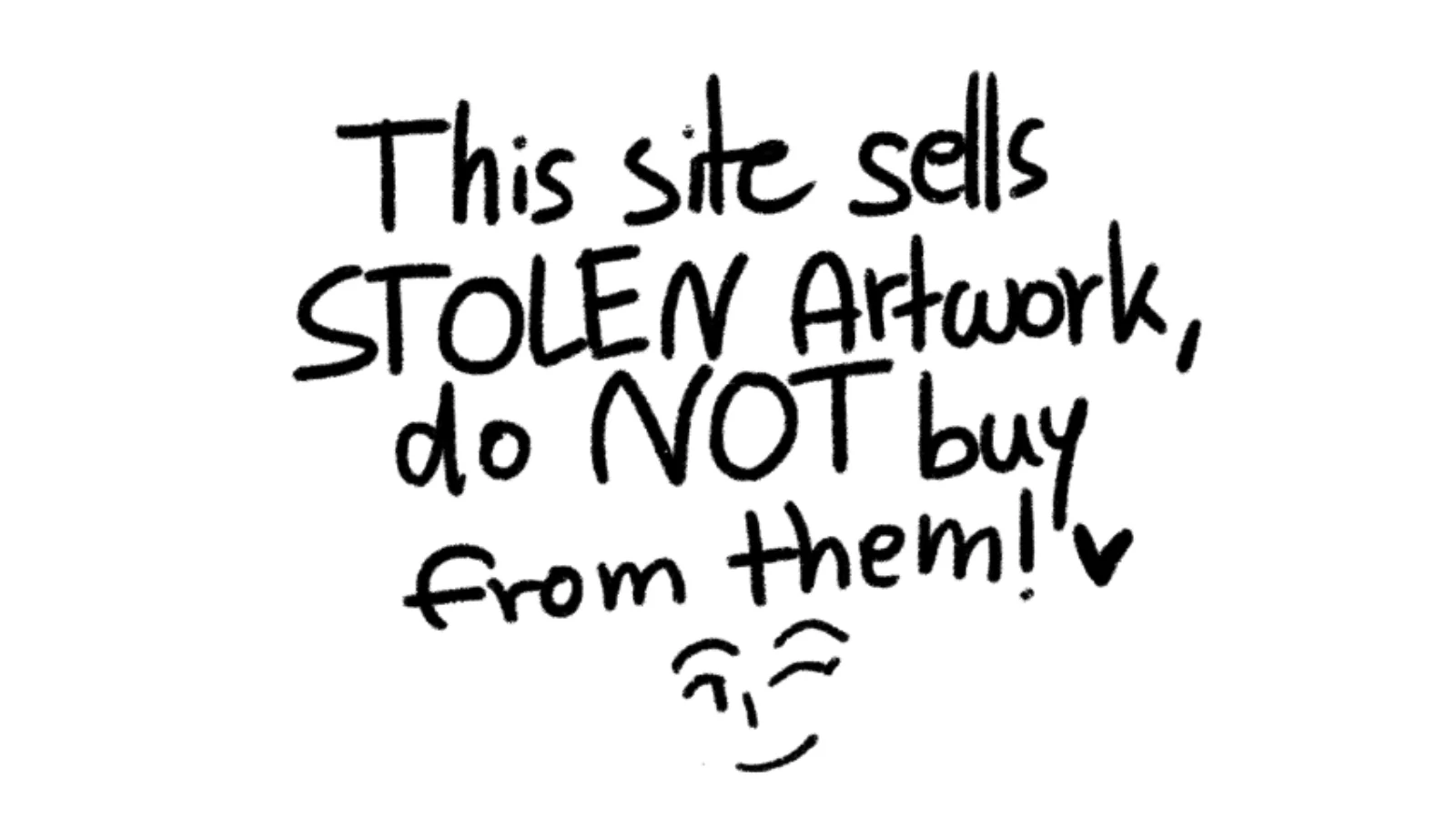
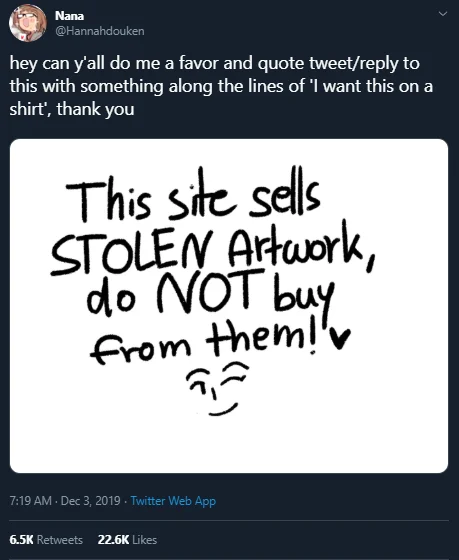
On December 1, 2019, artist Rob Schamberger (@robschamberger) posted a warning tweet explaining that shirt bots scrape any Twitter image that gets "I need this on a shirt" replies, funneling stolen art into online stores that profit off it[1]. Two days later, on December 3, 2019, Twitter user @Hannahdouken flipped the trick and posted an image reading "This site sells STOLEN artwork, do NOT buy from them!", asking followers to reply requesting it as a shirt[2]. The tweet pulled over 6,800 retweets and 24,000 likes within two days as the community piled on with bait replies.
- Platform: Twitter
- Creator: Hannahdouken (popularized the bait format after Rob Schamberger's warning)
- Date: 2019
Overview
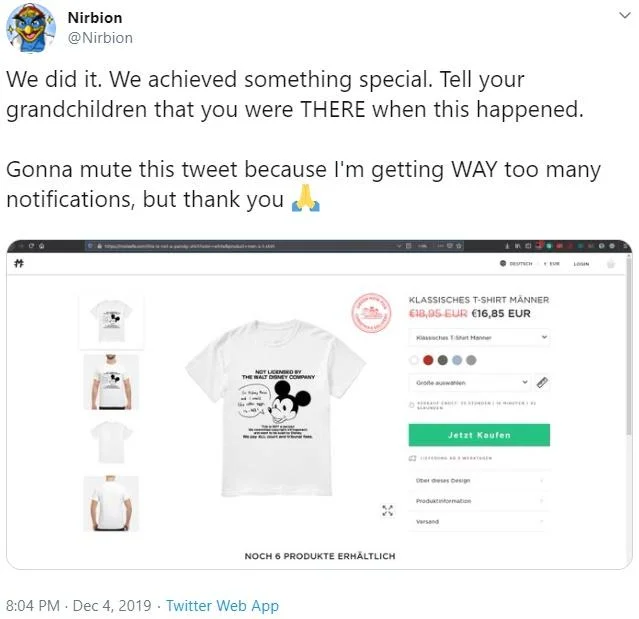
I Want This On A Shirt Bot Bait is an anti-piracy prank where Twitter users trick automated print-on-demand shops into scraping images that expose those very stores as art thieves[1]. Certain online T-shirt companies run scraper accounts that monitor Twitter for replies saying "I need this on a shirt," then automatically list whatever image is attached as a shirt design[3]. Users exploit this by posting warning graphics or absurd text and getting followers to pile in with shirt requests, so the bots publish incriminating or embarrassing product pages within hours[2].
How It Spread
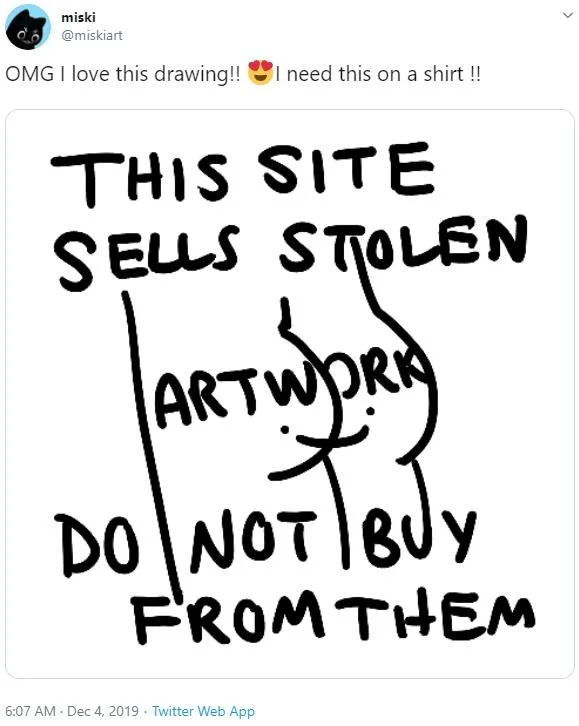
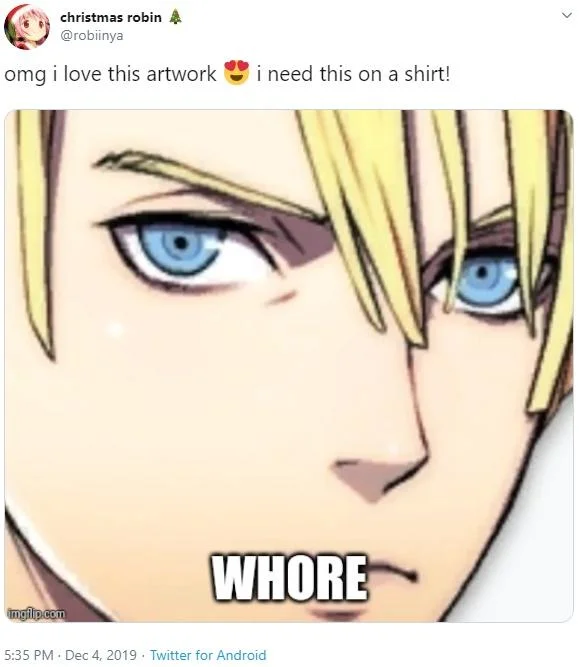
Within hours of the @Hannahdouken post, the warning graphic was scraped by stores including Toucan Style, Moteefe, CopThis, Teezyl, Gearbubble, and Teechip, each auto-generating product pages that publicly identified them as art thieves[3]. Copycat baits followed within days, with a December 4, 2019 tweet from @miskiart pulling around 5,600 retweets and 29,900 likes as artists piled onto the tactic[6].
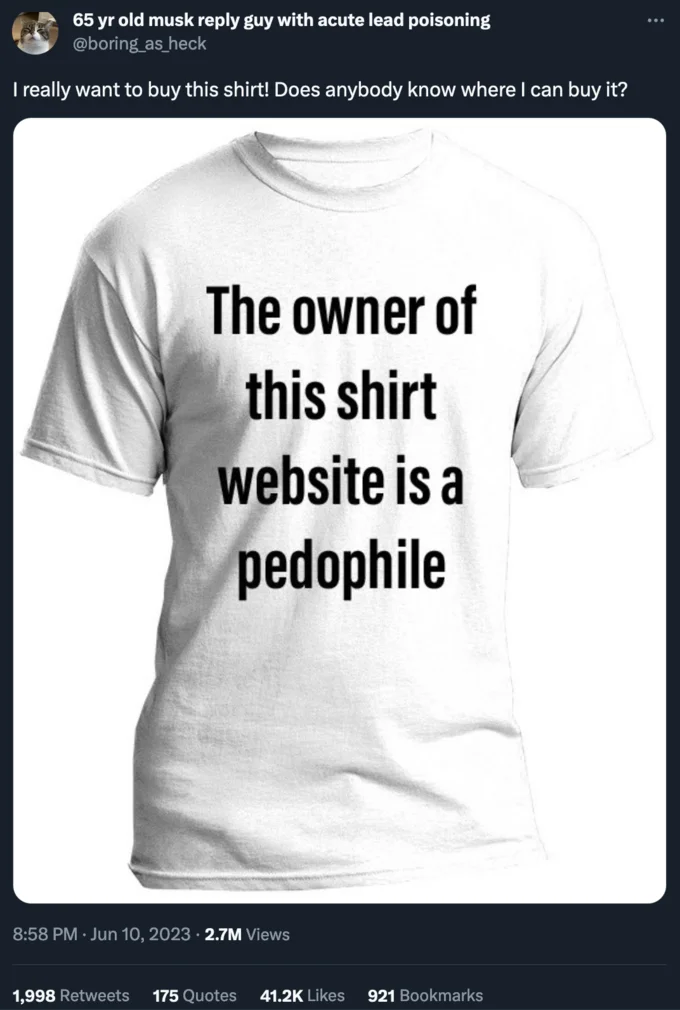
The bait technique came back in June 2023 with a darker, jokier twist aimed less at protecting artists and more at getting bots to publish absurd or defamatory text under real store URLs. On June 10, 2023, @GarlicCorgi got shirt bots to churn out designs reading "Believe Women Were Killed By Patton Oswalt," pulling over 11,000 likes in two days[4]. The same day, @boring_as_heck ran a bait tweet that pulled over 41,000 likes[5]. A notable 2023 example falsely claimed that J.K. Rowling killed two people in a 1993 drunk driving incident, with the fabricated line ending up on live shirt listings[3].
How to Use
Users typically post an image with bold text making a warning, joke, or absurd claim, then others reply "I need this on a shirt" or "I want this on a shirt" to trigger scraper bots[1]. Common practice is to bundle the bait image with a coordinated wave of replies, since the bots key off the phrase rather than the image content, and the ask itself is what triggers the auto-listing on print-on-demand sites.
Frequently Asked Questions
What is I Want This On A Shirt Bot Bait?
It is a Twitter prank where users get print-on-demand scraper bots to auto-list a bait image, either to expose art-thief stores or to publish absurd text on real product pages[1][3].
Where did I Want This On A Shirt Bot Bait come from?
Artist Rob Schamberger described the bot behavior in a December 1, 2019 warning tweet, and @Hannahdouken weaponized it on December 3, 2019 with an anti-piracy warning graphic that stores promptly scraped[1][2].
What does I Want This On A Shirt Bot Bait mean?
It refers to using the phrase "I need this on a shirt" as bait so that scraper bots turn a chosen image into a real product listing on print-on-demand shops[3].
How do you use I Want This On A Shirt Bot Bait?
Post an image with a warning or absurd message, then have followers reply with variations of "I need this on a shirt" so the scraper bots pick it up and auto-generate storefront pages[1].
Is I Want This On A Shirt Bot Bait still popular?
The tactic saw two clear waves, in December 2019 and June 2023, and is best known from those runs rather than as a daily practice[3][4].